
Showing posts with label criticism. Show all posts
Showing posts with label criticism. Show all posts


December 25, 2012
Android for Architects & Designers
With the introduction of Google's chromebook, a laptop device running their mobile Android operating system and manufactured by Samsung & Acer, we are seeing the possible rise of a third computer choice for architects and designers.
Already there are a number of apps created for mobile devices running Android, but now being extended to laptops and the support of Google's ever-increasing market and open source options, this offers a widening of the potential for AEC fields. Autodesk is aware of the market in Android mobile computing and has produced a number of apps for this emerging market including AutoCAD WS, 360 Mobile and Sketchbook Pro.
Here is a list of other useful apps:
Bimshare - described as the easiest way to share your building model online. This app, acquired by Gehry Technologies in 2012, allows Architects and Engineers to share models, concepts and ideas with teams on BIM projects Your models display beautifully in your browser can view by story, show and hide individual parts of the building or view only parts of a certain type. Supports ifc files.
Redstick - This app allows users to measure buildings using anything from a tape measure to a bluetooth laser measuring device and accurately store that information in an electronic format. The files integrate with any cad software in either a 2D or 3D format and can any opened with any BIM/CAD application including ArchiCAD, REVIT, Microstation or Architect.
Smart Tools Pro is an all-in-one package of 15 apps including a rulers, levels, compasses, flashlights, protractors, etc. This collection of apps allows you to measure lengths, angles, distances, heights, directions and sounds with your phone. The app also allows you to add more tools as they become available.
Design Dimensions Pro - a reference tool for design professionals that features an extensive visual database with dimensions of commonly referenced items. The app allows users to navigate through hundreds of illustrated items to find the exact information you are looking for.
iConfirm - this project management app allows users to create change orders, disclaimers, timelines, memoranda and other documents remotely. Documents can be built, signed and saved to the application and distributed in PDF format.
Already there are a number of apps created for mobile devices running Android, but now being extended to laptops and the support of Google's ever-increasing market and open source options, this offers a widening of the potential for AEC fields. Autodesk is aware of the market in Android mobile computing and has produced a number of apps for this emerging market including AutoCAD WS, 360 Mobile and Sketchbook Pro.
Here is a list of other useful apps:
Bimshare - described as the easiest way to share your building model online. This app, acquired by Gehry Technologies in 2012, allows Architects and Engineers to share models, concepts and ideas with teams on BIM projects Your models display beautifully in your browser can view by story, show and hide individual parts of the building or view only parts of a certain type. Supports ifc files.
Redstick - This app allows users to measure buildings using anything from a tape measure to a bluetooth laser measuring device and accurately store that information in an electronic format. The files integrate with any cad software in either a 2D or 3D format and can any opened with any BIM/CAD application including ArchiCAD, REVIT, Microstation or Architect.
Smart Tools Pro is an all-in-one package of 15 apps including a rulers, levels, compasses, flashlights, protractors, etc. This collection of apps allows you to measure lengths, angles, distances, heights, directions and sounds with your phone. The app also allows you to add more tools as they become available.
Design Dimensions Pro - a reference tool for design professionals that features an extensive visual database with dimensions of commonly referenced items. The app allows users to navigate through hundreds of illustrated items to find the exact information you are looking for.
iConfirm - this project management app allows users to create change orders, disclaimers, timelines, memoranda and other documents remotely. Documents can be built, signed and saved to the application and distributed in PDF format.
November 3, 2012
Embracing Modernity: The Transformation of Jamaica's Architecture after 1962

Ministry of Education Building, architect Wilson Chong
image (c) David Cuthbert
Architectural Historian and Senior Lecturer at the Caribbean School of Architecture, Dr. Elizabeth Pigou-Dennis will be presenting a paper entitled "Embracing Modernity: The Transformation of Jamaica's Architecture after 1962" as part of the History at Fifty Conference at the University of the West Indies. The event will be held on Saturday, 10th November 2012 at the Council Room, UWI, Mona at 1:30pm.
May 17, 2012
Call for Submissions: SHIFT

How can we engage the designer, the community, and ecology in the process of design?
What does this process look like? Where does it happen?
How do these processes improve on current techniques?
For detailed submission requirements and for more information
March 4, 2011
architecture in movies, a list from A to Z
The following is a list of films (A to Z, non-documentary) that feature noted architecture as the primary setting.
Aeon Flux (2005) ::: Baumschulenweg Crematorium by Schultes Frank Architects
Brainstorm (1983) ::: Burroughs Wellcome headquarters by Paul Roduloph
the Cell (2000) ::: Neuroscience Institute, California architect Tod Williams & Billie Tsien
Disappearance ::: Habitat 67, Montreal - architect Moshie Sadfie
E
Full Throttle (Charlie's Angels 2) (2003) ::: Sheats/Goldstein house by John Lautner
Gattaca (1997) ::: Marin Country Civic centre, California by architect Frank Lloyd Wright
The Heiress (1949) ::: Washington Square Park Arch by Standford White
the International (2009) ::: Guggenheim Museum, New York by architect Frank Lloyd Wright
J
Karate Kid III (1989) ::: Ennis House in Los Angeles, California by Frank Lloyd Wright
Le Mépris (1963) ::: Villa Malaparte by architect Adalberto Libera
Mission Impossible II (2000) ::: Sydney Opera House by Jørn Utzon
North by Northwest (1959) ::: A Frank Lloyd Wright-esque designed by Alfred Hitchcock's creative team
Orange County::: Diamond Ridge high school - architect Morphosis/ Thom Mayne
The Passenger (1975) ::: La Pedrera, Barcelona - by architect Antonio Gaudi
Quantum of Solace (James Bond 22) ::: Festival House Bregenz, Austria - architect Dietrich Untertrifaller and the ESO Paranal hotel, Chile by architects Auer and Weber
Robocop - Dallas City Hall by I.M Pei
Sleeper (1973) ::: the Sculptured house by Charles Deaton
Twilight (2008) ::: the Hoke house by Skylab
U
Venture Bros (cartoon) ::: a modelled version of the Storer House by Frank Lloyd Wright
World is Not Enough (James Bond 20) ::: Millennium dome, UK - architect Richard Rogers
Who am I? ::: Kubuswonig (Cubic houses), Rotterdam - architect Piet Blom
X
Y
Zabriskie Point ::: Zabriskie Point house, Arizona - architect Paolo Soleri
for more on the topic
Your kind assistance is needed in finishing this list.
Aeon Flux (2005) ::: Baumschulenweg Crematorium by Schultes Frank Architects
Brainstorm (1983) ::: Burroughs Wellcome headquarters by Paul Roduloph
the Cell (2000) ::: Neuroscience Institute, California architect Tod Williams & Billie Tsien
Disappearance ::: Habitat 67, Montreal - architect Moshie Sadfie
E
Full Throttle (Charlie's Angels 2) (2003) ::: Sheats/Goldstein house by John Lautner
Gattaca (1997) ::: Marin Country Civic centre, California by architect Frank Lloyd Wright
The Heiress (1949) ::: Washington Square Park Arch by Standford White
the International (2009) ::: Guggenheim Museum, New York by architect Frank Lloyd Wright
J
Karate Kid III (1989) ::: Ennis House in Los Angeles, California by Frank Lloyd Wright
Le Mépris (1963) ::: Villa Malaparte by architect Adalberto Libera
Mission Impossible II (2000) ::: Sydney Opera House by Jørn Utzon
North by Northwest (1959) ::: A Frank Lloyd Wright-esque designed by Alfred Hitchcock's creative team
Orange County::: Diamond Ridge high school - architect Morphosis/ Thom Mayne
The Passenger (1975) ::: La Pedrera, Barcelona - by architect Antonio Gaudi
Quantum of Solace (James Bond 22) ::: Festival House Bregenz, Austria - architect Dietrich Untertrifaller and the ESO Paranal hotel, Chile by architects Auer and Weber
Robocop - Dallas City Hall by I.M Pei
Sleeper (1973) ::: the Sculptured house by Charles Deaton
Twilight (2008) ::: the Hoke house by Skylab
U
Venture Bros (cartoon) ::: a modelled version of the Storer House by Frank Lloyd Wright
World is Not Enough (James Bond 20) ::: Millennium dome, UK - architect Richard Rogers
Who am I? ::: Kubuswonig (Cubic houses), Rotterdam - architect Piet Blom
X
Y
Zabriskie Point ::: Zabriskie Point house, Arizona - architect Paolo Soleri
for more on the topic
Your kind assistance is needed in finishing this list.
January 25, 2011
100 books - the architect's version
Have you read more than 6 of these books? The BBC came up with some silly list that most people have read a small number of 100 books listed.
I think that is total bollocks since I've spent much of my adult life reading architecture books.
So I made a new list and I'm seeking the help of my friends to carry it to 100. Instructions: I've added a few seminal texts... suggest some others and let's give the BBC a real show.
1. City of Bits - William Mitchell
2. Event Cities (1, 2 & 3) - Bernard Tschumi
3. The Curves of Time - Oscar Niemeyer
4. SMLXL - Rem Koolhaas/Bruce Mau
5. Towards a New Architecture - Le Corbusier
6. Architecture After Modernism - Diane Ghiardo
7. The Architecture of Happiness - Alain de Botton
8. Design Like you Give a Damn - Architecture for Humanity
10. Architecture and Utopia - Manfredo Tafuri
11. The Space of Encounter - Daniel Libeskind
12. Thinking Architecture - Peter Zumthor
13. Experiencing Architecture - Steen Eiler Rasmussen
14. 101 Things I Learned in Architecture School - Matthew Frederick
15. For an Architecture of Reality - Michael Benedikt
16. The Poetics of Space - Gaston Bachelard
17. Discrimination by Design - Leslie Weisman
18. The Temple in the House - Anthony Lawlor
19. Athens Charter - CIAM (Le Corbusier)
20. Delirious New York - Rem Koolhaas
21. Manhattan Transcripts - Bernard Tschumi
22. Radiant City - Le Corbusier
23. An Essay on Architecture - Marc-Antoine Laugier
24. The Ten Books on Architecture - Vitruvius
25. On the Art of Building in Ten Books - Leon Battista Alberti
26. Essential Texts - Louis Kahn
27. City Planning According to Artistic Principles - Camillo Sitte
28. Team 10 Primer - Alison Smithson (ed.)
29. The Architecture of the City - Aldo Rossi
30. Learning from Las Vegas - Robert Venturi, et. al.
31. Collage City - Colin Rowe and Fred Koetter
32. Kindergarten Chats and Other Writings - Louis Sullivan
33. Space, Time and Architecture - Sigfried Giedion
34. The Death and Life of Great American Cities - Jane Jacobs
35. The Four Books of Architecture - Andrea Palladio
36. Design with Nature - Ian McHarg
37. The Seven Lamps of Architecture - John Ruskin
38. Scope of Total Architecture - Walter Gropius
39. Building with Nature - Richard Neutra
40. Ornament and Crime: Selected Essays - Adolf Loos
41. The Living City - Frank Lloyd Wright
42. A Pattern Language - Christopher Alexander
43. Eyes Of The Skin - Juhani Pallasmaa
44. Mask of Medusa - John Hejduk
45. Architecture Of Disjunction - Bernard Tschumi
46. Topology Of A Phantom City - Alain Robbe-Grillet
47. Education Of An Architect - Elizabeth Diller, John Hejduk, etc
48. Architecture Theory Since 1968 - K. Michael Hays
49. Teach Your Chicken To Fly - Trevor Weekes
50. Palace of the Peacock - Wilson Harris
51. Why Buildings Stand Up - Mario Salvadori
52. The Place of Houses - Charles Moore et al
53. How Designers think - Bryan Lawson
54. Chambers for a Memory Palace - Charles Moore et al
55. The Design Studio - Donald Schon
56. city of slums mike davis
57. the Sphere and the Labyrinth - Manfredo Tafuri
58. Programs and Manifestoes of 20th century architecture - Ulrich Conrads
59. Inside Architecture - Vittorio Gregotti
60. Critical History of Modern Architecture - Kenneth Frampton
61. Architecture of Four Ecologies - Reyner Banham, Anthony Vidler
62. The Image of the City - Kevin Lynch
63. House for Mr. Biswas - VS Naipaul
64. Questions of Perception: Phenomenology of Architecture - Steven Holl, etc
65. The World of Perception - Maurice Merleau Ponty
66. Phenomenology of Perception - Maurice Merleau Ponty
67. Architectural Representation and the Perspective Hinge - Perez-Gomez & Pelletier
68. The Troubadour of Knowledge - Michael Serres
69. 13 Ways - Richard Harbison
70. Kaz Antiye Jan Moun Ka Rete: Caribbean Popular Dwelling - Jack Berthelot
71. Cities: X Lines: Approaches to City and Open Territory Design - Joan Busquets
72. The Landscape Urbanism Reader - Charles Waldheim
73. Recovering Landscape - Essays in Contemporary Landscape Theory - ed James Corner
74. File under Architecture - Herbert Muschamp
75. Labour Work and Architecture - Kenneth Frampton
76. Studies in Tectonic Culture: The Poetics of Construction in 19 & 20th c Architecture - Kenneth Frampton
77. Emergency, Deadline, Duration - Marc Jalet
78. The Honeywood File: An Adventure in Building - H.B. Creswell
79. The Social Logic of Space - Hillier and Hanson
80. Tropical Architecture in the Humid Zone - Fry and Drew
81. Constructing Architecture: Materials, Processes, Structures - Andrea Deplazes
82. Constructing Landscape: Materials, Techniques, Structural Components - Astrid Zimmeman
83. Plusminus 20/40 Latitude: Sustainable Building Design in Tropical and Subtropical Regions - Dirk Hindrichs
84. Typographie - Otl Aicher
85. The World as Design - Otl Aicher
86. Analogous Digital - Otl Aicher
87. Intermediate Natures - the Landscapes of Michael Desvigne
88. The Architect in Practice - Chappell & Willis
89. Intermediate Natures: The Landscapes of Michel Desvigne - Elizabeth Zugler
90. Die Küche zum Kochen: Das Ende Einer Architekturdoktrin - Otl Aicher
91. Theoretical Anxiety and Design Strategies - Rafael Moneo
92. The Public Chance: New Urban Landscapes - Aurora Fernandez Per & Javier Arpa
93. Roberto Burle Marx: Landscapes Reflected - Rossana Vaccarino (ed)
94. Latin America Architecture 1929 to 1960 - Brillenbourg & Riley
95. ANY series (Anything, Anyone, Anywhere, Anyway, Anyplace, Anywise, Anybody, Anyhow, Anytime, and Anymore) - Cynthia Davidson (ed.)
96. Sites of Memory: Perspectives on Architecture and Race - Craig Evan Barton
97. Agenda: Can we sustain our ability to crisis - JDS architects
98. Architecture NOW! (series) - Philip Jodidio
99. Space & Place - Yi-Fu Tuan
100.Analysing Architecture - Simon Unwin
Special thanks to Architects Mark Raymond, Jacquiann Lawton, Donna Sink, Ken Koense, Phillip Crosby, Rohan Bailey, Barry Lehrman, Ana María León, Daren Moncrieffe and students Vanessa Hartley, Dwayne Webb, Stein Carrington & Sheena Marston for their contributions
I think that is total bollocks since I've spent much of my adult life reading architecture books.
So I made a new list and I'm seeking the help of my friends to carry it to 100. Instructions: I've added a few seminal texts... suggest some others and let's give the BBC a real show.
1. City of Bits - William Mitchell
2. Event Cities (1, 2 & 3) - Bernard Tschumi
3. The Curves of Time - Oscar Niemeyer
4. SMLXL - Rem Koolhaas/Bruce Mau
5. Towards a New Architecture - Le Corbusier
6. Architecture After Modernism - Diane Ghiardo
7. The Architecture of Happiness - Alain de Botton
8. Design Like you Give a Damn - Architecture for Humanity
10. Architecture and Utopia - Manfredo Tafuri
11. The Space of Encounter - Daniel Libeskind
12. Thinking Architecture - Peter Zumthor
13. Experiencing Architecture - Steen Eiler Rasmussen
14. 101 Things I Learned in Architecture School - Matthew Frederick
15. For an Architecture of Reality - Michael Benedikt
16. The Poetics of Space - Gaston Bachelard
17. Discrimination by Design - Leslie Weisman
18. The Temple in the House - Anthony Lawlor
19. Athens Charter - CIAM (Le Corbusier)
20. Delirious New York - Rem Koolhaas
21. Manhattan Transcripts - Bernard Tschumi
22. Radiant City - Le Corbusier
23. An Essay on Architecture - Marc-Antoine Laugier
24. The Ten Books on Architecture - Vitruvius
25. On the Art of Building in Ten Books - Leon Battista Alberti
26. Essential Texts - Louis Kahn
27. City Planning According to Artistic Principles - Camillo Sitte
28. Team 10 Primer - Alison Smithson (ed.)
29. The Architecture of the City - Aldo Rossi
30. Learning from Las Vegas - Robert Venturi, et. al.
31. Collage City - Colin Rowe and Fred Koetter
32. Kindergarten Chats and Other Writings - Louis Sullivan
33. Space, Time and Architecture - Sigfried Giedion
34. The Death and Life of Great American Cities - Jane Jacobs
35. The Four Books of Architecture - Andrea Palladio
36. Design with Nature - Ian McHarg
37. The Seven Lamps of Architecture - John Ruskin
38. Scope of Total Architecture - Walter Gropius
39. Building with Nature - Richard Neutra
40. Ornament and Crime: Selected Essays - Adolf Loos
41. The Living City - Frank Lloyd Wright
42. A Pattern Language - Christopher Alexander
43. Eyes Of The Skin - Juhani Pallasmaa
44. Mask of Medusa - John Hejduk
45. Architecture Of Disjunction - Bernard Tschumi
46. Topology Of A Phantom City - Alain Robbe-Grillet
47. Education Of An Architect - Elizabeth Diller, John Hejduk, etc
48. Architecture Theory Since 1968 - K. Michael Hays
49. Teach Your Chicken To Fly - Trevor Weekes
50. Palace of the Peacock - Wilson Harris
51. Why Buildings Stand Up - Mario Salvadori
52. The Place of Houses - Charles Moore et al
53. How Designers think - Bryan Lawson
54. Chambers for a Memory Palace - Charles Moore et al
55. The Design Studio - Donald Schon
56. city of slums mike davis
57. the Sphere and the Labyrinth - Manfredo Tafuri
58. Programs and Manifestoes of 20th century architecture - Ulrich Conrads
59. Inside Architecture - Vittorio Gregotti
60. Critical History of Modern Architecture - Kenneth Frampton
61. Architecture of Four Ecologies - Reyner Banham, Anthony Vidler
62. The Image of the City - Kevin Lynch
63. House for Mr. Biswas - VS Naipaul
64. Questions of Perception: Phenomenology of Architecture - Steven Holl, etc
65. The World of Perception - Maurice Merleau Ponty
66. Phenomenology of Perception - Maurice Merleau Ponty
67. Architectural Representation and the Perspective Hinge - Perez-Gomez & Pelletier
68. The Troubadour of Knowledge - Michael Serres
69. 13 Ways - Richard Harbison
70. Kaz Antiye Jan Moun Ka Rete: Caribbean Popular Dwelling - Jack Berthelot
71. Cities: X Lines: Approaches to City and Open Territory Design - Joan Busquets
72. The Landscape Urbanism Reader - Charles Waldheim
73. Recovering Landscape - Essays in Contemporary Landscape Theory - ed James Corner
74. File under Architecture - Herbert Muschamp
75. Labour Work and Architecture - Kenneth Frampton
76. Studies in Tectonic Culture: The Poetics of Construction in 19 & 20th c Architecture - Kenneth Frampton
77. Emergency, Deadline, Duration - Marc Jalet
78. The Honeywood File: An Adventure in Building - H.B. Creswell
79. The Social Logic of Space - Hillier and Hanson
80. Tropical Architecture in the Humid Zone - Fry and Drew
81. Constructing Architecture: Materials, Processes, Structures - Andrea Deplazes
82. Constructing Landscape: Materials, Techniques, Structural Components - Astrid Zimmeman
83. Plusminus 20/40 Latitude: Sustainable Building Design in Tropical and Subtropical Regions - Dirk Hindrichs
84. Typographie - Otl Aicher
85. The World as Design - Otl Aicher
86. Analogous Digital - Otl Aicher
87. Intermediate Natures - the Landscapes of Michael Desvigne
88. The Architect in Practice - Chappell & Willis
89. Intermediate Natures: The Landscapes of Michel Desvigne - Elizabeth Zugler
90. Die Küche zum Kochen: Das Ende Einer Architekturdoktrin - Otl Aicher
91. Theoretical Anxiety and Design Strategies - Rafael Moneo
92. The Public Chance: New Urban Landscapes - Aurora Fernandez Per & Javier Arpa
93. Roberto Burle Marx: Landscapes Reflected - Rossana Vaccarino (ed)
94. Latin America Architecture 1929 to 1960 - Brillenbourg & Riley
95. ANY series (Anything, Anyone, Anywhere, Anyway, Anyplace, Anywise, Anybody, Anyhow, Anytime, and Anymore) - Cynthia Davidson (ed.)
96. Sites of Memory: Perspectives on Architecture and Race - Craig Evan Barton
97. Agenda: Can we sustain our ability to crisis - JDS architects
98. Architecture NOW! (series) - Philip Jodidio
99. Space & Place - Yi-Fu Tuan
100.Analysing Architecture - Simon Unwin
Special thanks to Architects Mark Raymond, Jacquiann Lawton, Donna Sink, Ken Koense, Phillip Crosby, Rohan Bailey, Barry Lehrman, Ana María León, Daren Moncrieffe and students Vanessa Hartley, Dwayne Webb, Stein Carrington & Sheena Marston for their contributions
June 8, 2010
what's with the horses??

.jpg)

December 15, 2009
inflatable architecture
The notion of a less dangerous Hindenburg blimp, as seen in Archigram's Instant city slowly hovering the English countryside has proven to be fertile ground space to a new generation of designers.

hot air blog


Spacebuster ::: an installation by Raumlabor a German student led collective that aims to create ephemeral places or shelter-bubbles in public space. And a peanut shaped tea-house by Kengo Kuma
and now Abitare are annoucing at DS+R have proposed an inflatable extension to the Hirshhorn Museum in Washington DC.

hot air blog


and now Abitare are annoucing at DS+R have proposed an inflatable extension to the Hirshhorn Museum in Washington DC.
December 1, 2009
criticism: what's next for Dubai?
With news of the financial crisis in Dubai, and now their requests to have a 6-month reprieve on their debt payments (nearly 60 billion) I'm left to wonder about its architectural implication. Not that there won't be any more symbols of excess in the desert by signature architects, rather the next step in this rapid evolution. Dubai in the first decade of the 21st century has created a legacy in architecture arguably on par with the reconstruction of post-war Europe. But with that the great implication lies. Shall these works be torn apart and the scraps be sold to recover it's debt? With everyone from Sotheby's to Christies cashing in on the fetish of parts. Or shall special interest groups similar to the Royal Society or DOCOMOMO come to the rescue lobbying to preserve their architectural interests? The tide is changing, will this too be carried out to sea?
October 6, 2009

MANIFESTO
Architecture is being invented just like one invents a car or a plane. It has no boundaries and can be exported like any other creation. Sites never compelled a predetermined architecture.
Architecture has no public interest but private, except for some public buildings or monuments.
It is the synthesis of all arts including every discipline and in that regard it should be free and should only obey to technical constraints, security, hygiene and land planning.
But Human beings have a different judgment. Deep frozen in the past and crazy about tradition, they added such useless constraints that any evolution seems to be impossible. Housing is yet the basis cell of any society is currently the only field where progress, especially in France, is almost impossible, in the global indifference of users and most of architects.
September 21, 2009
Cooper reviewed

July 21, 2009
built from ashes
As our cities increase to widths unimaginable the balance between the living and the dead must carefully be weighed. Historically in many cultures the dead were sited on the perimeter our towns or set a blaze reduced to ashes. Increasingly in our modern society especially where land is of a premium, areas previously earmarked for the dead are becoming housing or worse big box retail outlets. And it seemed we lost our regard for the dead or so we thought.
There has been a substantial increase over the years of architect designed crematoriums and sites for burial - sculptural, restrained, silent. Flores Zanchi describes the crematorium as "a space which induces contemplation of the thin line separating life from death and necessarily calls up absolute, archetypal forms...far removed from ordinary architectural issues"
Below is a list of the visually stimulating.

 Treptow Crematorium by Axel Schultes & Charlotte Frank with its forest of concrete columns piercing the slab, symbolically leading the ashes of the departed to the white light above
 The restrained modernism of the crematorium in Heimolen by architects Claus en Kaan
 Igualada Cemetery Park in Barcelona, Spain by Carme Pinos and the late Enric Miralles. This is a poetic exploration that transforms the surrounding landscape in a series of descending streets
There has been a substantial increase over the years of architect designed crematoriums and sites for burial - sculptural, restrained, silent. Flores Zanchi describes the crematorium as "a space which induces contemplation of the thin line separating life from death and necessarily calls up absolute, archetypal forms...far removed from ordinary architectural issues"
Below is a list of the visually stimulating.

 Treptow Crematorium by Axel Schultes & Charlotte Frank with its forest of concrete columns piercing the slab, symbolically leading the ashes of the departed to the white light above
 The restrained modernism of the crematorium in Heimolen by architects Claus en Kaan
 Igualada Cemetery Park in Barcelona, Spain by Carme Pinos and the late Enric Miralles. This is a poetic exploration that transforms the surrounding landscape in a series of descending streets


June 23, 2009
housing solutions??
The closing of Kaufmann Design, for many has signalled the end of pre-fabs primordial return. Prefab had returned to the pages of flashy architectural journals as the fix to both the global demand for housing - affordable or otherwise, as well a means to green the way we construct our houses by reducing waste, and a host of extras that could be added - solar panels, grey water systems, etc. But perhaps others took it a bit too far - a recent entry of a pre-fab house by Daniel Libeskind puts into disrepute the eco-credibility of many prefabricated houses whilst mocking his endeared portfolio.
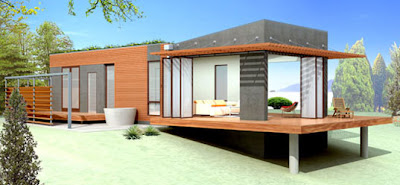 Many argue that a business model geared towards those financially equipped to afford a free standing single family residence on a self-owned property, like the David Adjaye designed Ed's Shed, was at the core of the demise. Added that single family houses generally run counter to the eco-practice in favour of density. The pre-fabricated house ran the course of most toys of the affluent, now being put down to rest.
In Jamaica prefabricated or prefab is often interchangeable with the term pre-cast since much of the work is typically made from pre-cast concrete. Added it is also synonymous with large housing estates built for low-income families. The use of pre-fab, has unfortunately been associated with poor quality, a stigma due mostly to its cost-effectiveness than it's performance.
 Manley Meadows, Jamaica
However in these two opposing markets, of differing construction the solution may conceivably lie. The parting prize for Kaufmann and her cohorts may be the lessens shared with her neighbours from the Caribbean - providing a prefabricated housing solution that is economically built and simultaneously attractive to an upwardly mobile market. A task unachieved by precast. Furthermore the variety of options that make them uniquely customizable, caters nicely to the desire of the individual.
previously
 Many argue that a business model geared towards those financially equipped to afford a free standing single family residence on a self-owned property, like the David Adjaye designed Ed's Shed, was at the core of the demise. Added that single family houses generally run counter to the eco-practice in favour of density. The pre-fabricated house ran the course of most toys of the affluent, now being put down to rest.
In Jamaica prefabricated or prefab is often interchangeable with the term pre-cast since much of the work is typically made from pre-cast concrete. Added it is also synonymous with large housing estates built for low-income families. The use of pre-fab, has unfortunately been associated with poor quality, a stigma due mostly to its cost-effectiveness than it's performance.
 Manley Meadows, Jamaica
previously
June 9, 2009
Interiors : a twisty twisty world


It is not often that scrolls of this architecture blog are taken over by modern interiors (we leave that to the talents of more officious blogs...) However the recent sculptural works of Belgian designer Sebastien Wierinck commanded such attention. The tentacled installations housed in otherwise blah interiors, exemplify a talent in both object creation and space making. Constructed of plastic tubing the installations are formed using CAM technology, see the link for more information.
via Contemporist
May 15, 2009
thanks Chuck
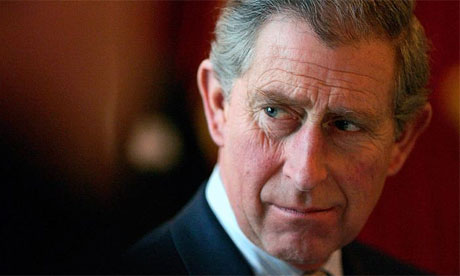
On the 12th May 2009, the Prince of Wales gave the key note speech for 175th anniversary of the Royal Institute of British Architects. In his words he aimed to lend support to, "traditional approaches to architecture and urbanism," but instead reopened a wound as equally damning as his 1984 speech that perhaps originally begun this style war or as I prefer to think of it, as the imposition of the natural progression of architecture to review, revise and express the emergent values of contemporary society.
Why is HRH Prince Charles hampering on the relatively small number of architects designing and building structural gymnastics when much of the United Kingdom and it's Commonwealth (expanding or otherwise) is littered with architecture that attempts to be historically iconographic? The question at my lips is if his motives are truly genuine to the practice, and as Jeremy Till states, the products of architecture or instead to preserve a lifestyle (the über affluent and blue blooded kind), that functions entirely on submission, order and the negation of independent thought.
The Prince has attempted to cloud his arguments behind a social and environmentally ethical shroud, creating a scenario of extremes, claiming support for "an architecture bound to place not to time." How unfortunate that at a point when architecture is redefining it's role in the face of a global financial and environmental crisis, that Brutus has chosen to stab us in the heart. HRH has called for a return to the good ol' days, and perhaps history has repeated itself.
more
January 15, 2009
Starchitects in the Caribbean
 Villa D, Zaha Hadid Architects
Dezeen recently featured the works of Shigeru Ban as part of Dellis Cay, a project consisting of million dollar villas designed by esteemed architects in the Turks and Caicos Islands. The list also includes Zaha Hadid, David Chipperfield, Kengo Kuma, Piero Lissoni, Chad Oppenheim, among others.
I mention this with excitement and reticence. Whilst it is great to have significant works of architecture constructed in the Caribbean - even though they are exclusive private residences, and aside from the historic precedents that exist - I am somewhat concerned with the environmental considerations of these projects.
 Maison H , Shigeru Ban
A cautionary word - starchitects take note due diligence is required.
May 20, 2008
between Cooking and Architecture


This posting at first glance may be about the interstitial space between architecture and the art of cooking or referring to the intersection of food and architecture...where good edible design exists. It reminds me of the television programme with a pastry chef making these fantastic cakes in remarkable forms...including the Sistine chapel. But alas it really recalls de Geuze infamous remarks about us, that "Architects are like Seagulls, they make alot of noise, the eat alot of food, and they leave shit everywhere"
previously:
Cooking for Engineers
Pop-up shops
links to similar:
Liao Yusheng
Architectural Maccheroni
books:
Food + Architecture
Eating Architecture
John Pawson's Living & Eating
the Cooked Kitchen
the Architect, the Cook and good taste
March 14, 2007
On this the 2nd anniversary of architechnophilia I felt it necessary to discuss the notion of starchitects and the trend of building green. Presently only a small percentage of the acclaimed architects are utilising sustainable practices in the design & construction of their buildings; most notably Glenn Murcutt, Renzo Piano, Norman Foster, Shigeru Ban and more recently Thom Mayne (of Morphosis).
Is this not the reason we have commercial & marketable faces for the architectural profession? Their responsibility to the practice of architecture is to create an avenue for discussion for what we believe is of consequence. The most important issue facing the profession, without debate is sustainability - a broad brush title for environmentally responsible architecture & construction. The more starchitects move toward building green structures, the more likely that a trend will emerge as the next generation mimics, follows and develops the ideas that can become standardised.
So let the green this St Patricks day stand for our committment to sustainable architectural practices.
a few green links
Architectural Record interviews William McDonough
Habitat for Humanity's modular house wins AIA housing award via treehugger
Is this not the reason we have commercial & marketable faces for the architectural profession? Their responsibility to the practice of architecture is to create an avenue for discussion for what we believe is of consequence. The most important issue facing the profession, without debate is sustainability - a broad brush title for environmentally responsible architecture & construction. The more starchitects move toward building green structures, the more likely that a trend will emerge as the next generation mimics, follows and develops the ideas that can become standardised.
So let the green this St Patricks day stand for our committment to sustainable architectural practices.
a few green links
Architectural Record interviews William McDonough
Habitat for Humanity's modular house wins AIA housing award via treehugger
August 17, 2006
Downtown Visions - boy in a bubble
Still in Atlanta, GA
Had a walk through downtown Altanta today, and what a shock. It was about noon, and not a soul was on the streets. A few cars rolled passed, and the parking garages (of which I saw numerous) were all filled. Its as if everyone doesn't leave their hermetically sealed environments...granted its really hot today.
I did find an interesting quote that was part of a land-art project adjacent to the Georgia State Communications Dept, "...why the streets are so crooked is, that every man built on his land just to suit himself..."
Had a walk through downtown Altanta today, and what a shock. It was about noon, and not a soul was on the streets. A few cars rolled passed, and the parking garages (of which I saw numerous) were all filled. Its as if everyone doesn't leave their hermetically sealed environments...granted its really hot today.
I did find an interesting quote that was part of a land-art project adjacent to the Georgia State Communications Dept, "...why the streets are so crooked is, that every man built on his land just to suit himself..."
Subscribe to:
Posts (Atom)
